


Market Refurbishment
Design Competition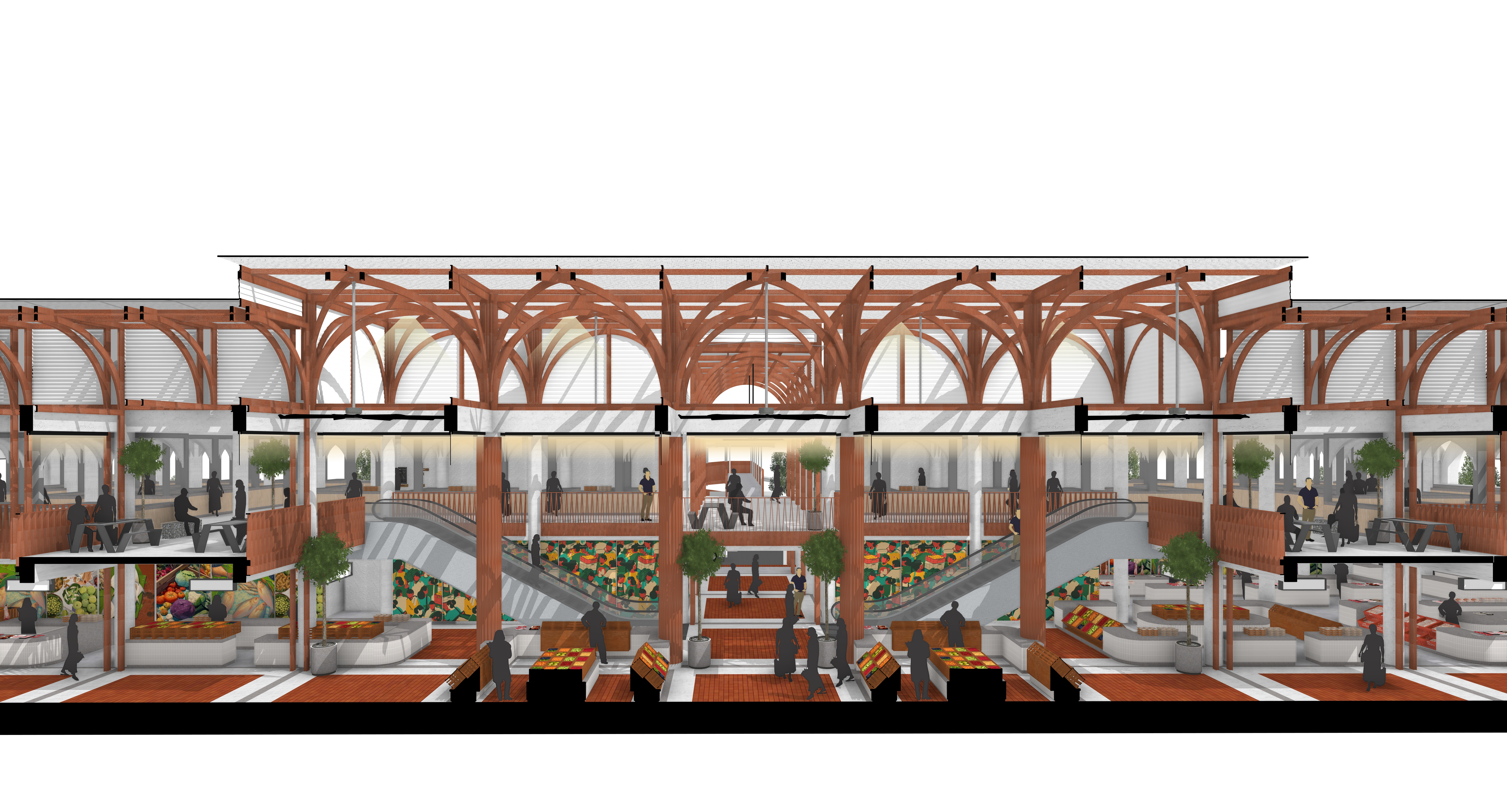
Category
Commercial, PublicAbout This Project
The scheme reimagines the market as a refreshed civic marketplace that preserves the familiarity of everyday market life while giving it a clearer identity, stronger public presence and improved functionality. The proposal does not replace the existing market memory; instead, it carefully upgrades the old market structure through selective demolition, new architectural insertions and a more legible spatial organisation.
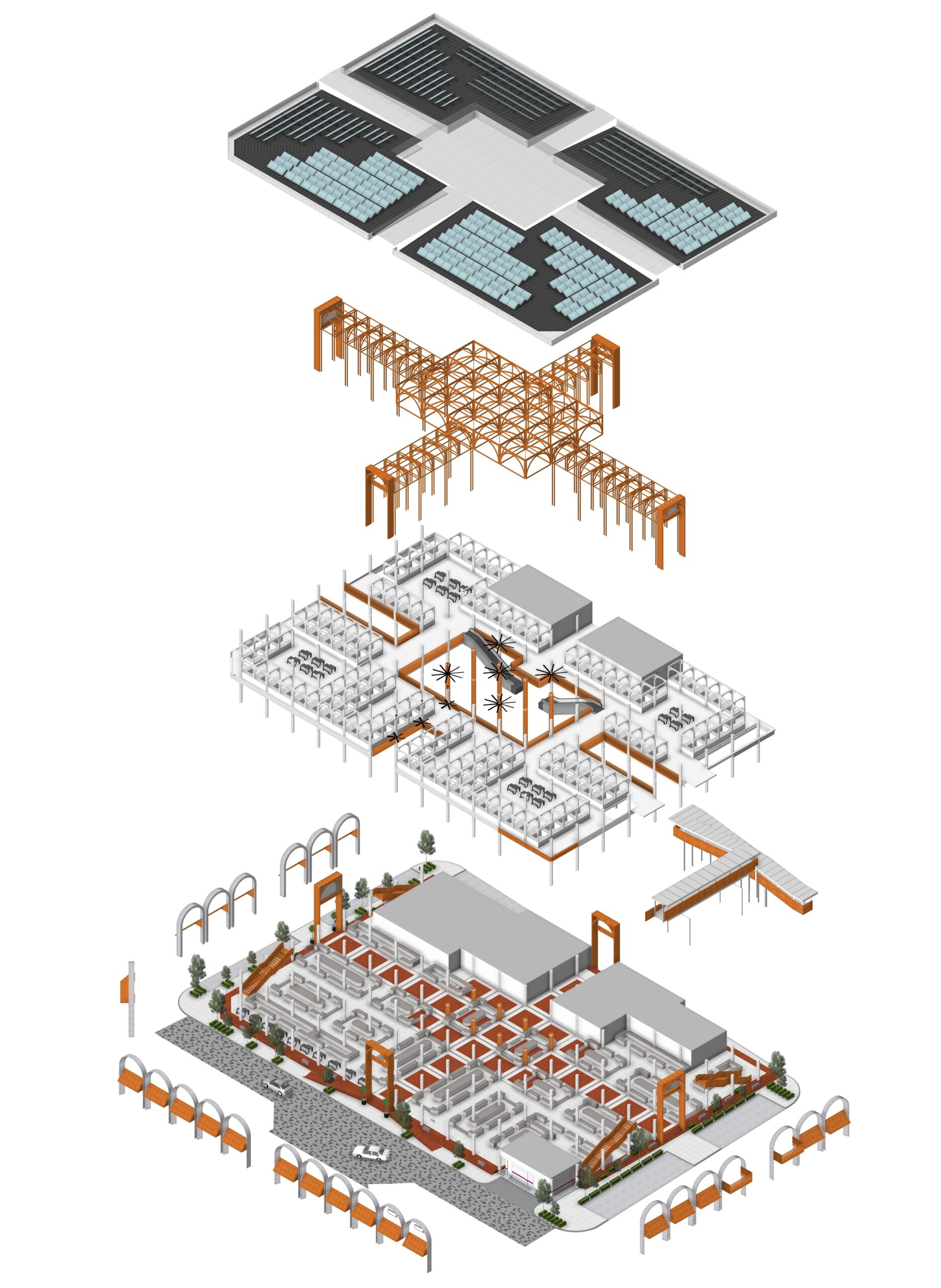
The existing market is currently affected by unorganised vehicular movement, unclear zoning, poor visibility and dark, unhygienic atmosphere. The design responds by opening up key edges, removing outdated components and introducing a centralised circulation framework that improves access, wayfinding and connectivity between the wet market, food areas, bazaar spaces and public amenities. A stronger ground floor market layout supports daily trading activities, while the upper floor is expressed as a bazaar and community oriented deck, connected through new staircases, escalators, lifts and external ramps.
The main architectural gesture is the new vaulted canopy spine and repeated archfaçade treatment. This Corten finished arches & frame acts as both structure and civic marker, creating a recognisable frontage for the market while complementing the surrounding contextual façade language. The arches, shaded awnings and active market frontages soften the building edge and create a welcoming street interface for traders, shoppers and pedestrians.
At the centre, the enlarged courtyard and atrium become the social heart of the market, bringing daylight, visual connection and public activity into the building. Around it, clearer zoning separates wet, dry, food, service and support functions, improving hygiene, movement and operational efficiency. External public realm improvements, including pedestrian walkways, landscape pockets, seating areas, organised parking, zebra crossings and one-way vehicular circulation, further reconnect the market to its urban surroundings.
Sustainability is introduced through practical interventions such as skylight/clerestory zones, shaded circulation, rainwater harvesting provision and proposed solar panels to support more responsible energy use. Overall, the refurbishment transforms the market into a more vibrant, accessible and dignified public market that celebrates local commerce, strengthens community life and gives the town a renewed architectural landmark rooted in its everyday culture.